Source luxury red art paper bag with twisted handles for Shopping, Gifts, and Retail
Find 30 listings for the luxury red art paper bag with twisted handles designed for shopping, gifts, and retail packaging. Buyers can compare customization options, paper types, and printing methods to select the ideal supplier for their needs.
Key considerations
Products List


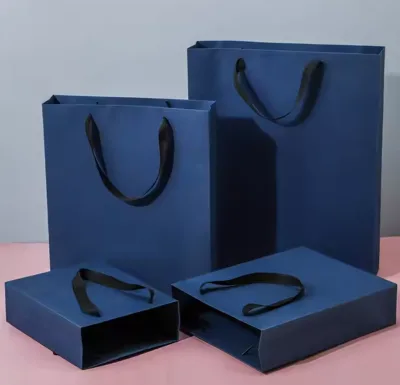


Comprehensive Sourcing Guide
Strategic Sourcing Guide for Luxury Red Art Paper Bags with Twisted Handles
Sourcing luxury packaging requires a meticulous approach that balances aesthetic demands with rigorous supply chain verification. When targeting a luxury red art paper bag with twisted handles, buyers must navigate a complex landscape of material specifications, printing capabilities, and compliance standards. The market offers a diverse array of options, ranging from standard kraft constructions to specialized coated paper solutions. This guide provides a disciplined framework for evaluating potential suppliers, ensuring that the final product meets the high expectations of premium branding while adhering to strict procurement protocols. The following sections detail the technical requirements, certification verification, cost structures, and quality assurance measures necessary for a successful procurement cycle.
Technical Specifications and Material Composition
The foundation of a luxury paper bag lies in its material composition and structural integrity. For a product described as a "luxury red art paper bag," the paper type is a critical differentiator. While standard sourcing often defaults to Kraft paper, high-end applications frequently utilize Coated Paper or Cardboard to achieve a specific sheen and rigidity. The supplied data indicates that products in this category can vary significantly in paper type, with options including Kraft Paper, Coated Paper, and Cardboard. Buyers must explicitly verify the paper grade, as the "art" designation implies a surface finish that enhances visual appeal.
The weight and thickness of the bag are equally vital. Data suggests a thickness range of 40GSM to 150GSM, with customization available for specific needs. For a luxury item intended to hold substantial weight, a thickness closer to the upper end of this spectrum is often preferred to prevent tearing and maintain shape. The weight of the bag itself is another variable; observed listings show bags weighing both under 0.5 Kg and over 1.5 Kg. A "luxury" classification typically demands a heavier, more substantial feel, suggesting a weight closer to the higher observed range. The shape is predominantly square or rectangular, with the rectangular form being common for standard shopping applications.
The handle configuration is a defining feature of the "twisted handle" requirement. The market data confirms that twisted handles are a standard offering, alongside flat handles, D-cut handles, and SOS (String On String) options. The handle must be securely attached to the bag body, often reinforced with a specific sealing method. The capacity weight for these bags is generally observed between 5kg and 10kg, with some specifications noting a limit of under 10kg. However, buyers should verify the specific load-bearing capacity of the chosen model, as the structural integrity of the twisted handle directly impacts the maximum safe load.
Surface Handling and Printing Capabilities
Visual presentation is paramount in luxury packaging. The printing process determines the vibrancy of the red color and the precision of any logos or branding elements. The supplied facts highlight two primary surface handling methods: Flexo Printing and Offset Printing. Flexo printing is noted for its efficiency and is capable of 8-color runs, which is suitable for vibrant, solid color blocks like a deep red. Offset printing, often associated with higher detail and smoother gradients, is also available and may be preferred for complex artwork involving old hot stamping or embossing.
The ink type is a crucial technical specification for luxury goods. Eco-friendly water-based soy ink is a documented standard in this category, offering a safer environmental profile compared to solvent-based inks. This aligns with the sustainability expectations of modern luxury brands. The color section options include customized Pantone colors, allowing for exact brand matching. While red is a specific observed color, the ability to customize to any Pantone shade is essential for maintaining brand consistency. The presence of special art features, such as hot stamping and embossing, can elevate the tactile experience of the bag, adding a layer of perceived value that justifies the "luxury" classification.
Compliance, Certification, and Environmental Standards
In the B2B procurement of packaging, compliance is non-negotiable. Buyers must verify that suppliers possess valid certifications that align with international standards. The observed data lists several high-confidence certifications, including FSC (Forest Stewardship Council), SGS, BRC (British Retail Consortium), ISO9001:2015, and QS. These certifications indicate that the supplier adheres to rigorous quality management systems, food safety standards (where applicable), and sustainable forestry practices.
The FSC certification is particularly relevant for paper products, ensuring that the wood pulp is sourced from responsibly managed forests. ISO9001:2015 confirms the supplier's commitment to consistent quality control processes. However, buyers should exercise caution regarding standard versions; while ISO9001:2015 is explicitly listed, older versions like ISO9001:2008 appear in background data and should not be assumed as current without verification. Similarly, while CE is mentioned in background contexts, it is not a primary certification for paper bags in the same way as FSC or SGS.
Environmental compliance extends beyond certifications to the materials themselves. The use of eco-friendly inks and the recyclable nature of the paper are key features. The product feature "Recyclable" is explicitly noted, which is a significant selling point for brands aiming to reduce their environmental footprint. Buyers should request documentation proving the recyclability of the specific paper blend and the non-toxic nature of the adhesives and inks used in the twisted handle construction.
Cost Drivers and Procurement Economics
Understanding the cost structure of luxury paper bags is essential for budget planning. The observed price range in the market is quite broad, spanning from $0.01 to $2.00 USD per unit. This wide variance is driven by several factors, including paper weight, printing complexity, and order volume. A bag with a thickness of 150GSM, 8-color flexo printing, and custom Pantone matching will naturally command a higher price than a basic 40GSM kraft bag with simple black printing.
The Minimum Order Quantity (MOQ) is another significant cost driver. The observed MOQ range is between 500 and 50,000 units. For luxury items, suppliers often require higher MOQs to justify the setup costs for custom molds, printing plates, and specialized handling. Buyers with smaller order volumes may face higher per-unit costs or may need to negotiate with suppliers who offer lower MOQs at a premium. The customization of the product, including the specific twisted handle design and custom logo printing, adds to the overall cost.
Lead time is also a critical economic factor. The standard delivery date observed is approximately 15 days after payment. This timeline can fluctuate based on the complexity of the order, the availability of raw materials, and the supplier's current production load. Buyers should account for this lead time in their inventory planning to avoid stockouts. Additionally, the packing method, which typically involves PE bags and seaworthy cartons, adds to the logistics cost and must be factored into the total landed cost calculation.
Typical Applications and Industrial Use Cases
The versatility of luxury paper bags with twisted handles makes them suitable for a wide range of industrial uses. The primary application is shopping packaging, where the bag serves as a mobile advertisement for the retailer. The "luxury" aspect is particularly valuable in the cosmetics, jewelry, and garment sectors, where the unboxing experience is part of the product value proposition. The data lists usage categories including greeting cards, letters, health care products, jewelry, electronic products, food, arts and crafts, and gifts.
For the cosmetics and jewelry industries, the bag's ability to hold items weighing up to 10kg (though typically much less) and its aesthetic appeal make it an ideal choice. The red color, often associated with passion, luxury, and celebration, is particularly effective for gift packaging and promotional events. The "Promotion" and "Gift" usage tags in the data confirm this versatility. Furthermore, the bag's suitability for household use and general packing suggests it can be utilized for high-end retail stores, boutique shops, and event planners.
The specific industrial use is categorized as "Shopping Packaging," but the functional requirements extend beyond simple containment. The bag must protect the contents during transport while maintaining a premium appearance. The twisted handle provides a comfortable grip, reducing strain on the hand when carrying heavier items, which is a key consideration for customers purchasing high-value goods.
Supplier Evaluation and Quality Control Protocols
Selecting the right supplier requires a rigorous evaluation process. Buyers should prioritize suppliers who demonstrate transparency in their production capabilities and quality control measures. The presence of certifications like SGS and BRC is a strong indicator of a supplier's reliability. However, buyers should not rely solely on these certificates; they must verify the scope of the certification to ensure it covers the specific production of paper bags.
Quality control should be integrated into the procurement process at multiple stages. Before mass production, buyers should request pre-production samples to verify the color accuracy of the red shade, the strength of the twisted handles, and the quality of the printing. The "Customized" nature of the product means that every batch should be treated as a unique order, requiring strict adherence to the approved sample.
During production, buyers should consider implementing third-party inspections to verify that the thickness, weight, and dimensions match the specifications. The observed hardness ranges from "Soft" to "Medium Soft," which affects the bag's ability to stand upright and hold its shape. Buyers must define the acceptable hardness range for their specific application. Post-production, a final inspection should confirm that the packaging (PE bags and seaworthy cartons) is adequate to prevent damage during shipping.
Long-Term Procurement Considerations and Sustainability
Sourcing luxury packaging is not a one-time transaction but a long-term partnership. Buyers should consider the scalability of the supplier's production capacity. The observed production capacity for weight is listed as 5kg, but this likely refers to the bag's load capacity rather than the factory's output volume. Buyers must ensure the supplier can scale production to meet increasing demand without compromising quality.
Sustainability is a growing priority in the luxury market. The use of eco-friendly inks and recyclable materials is a baseline expectation. However, buyers should look for suppliers who are proactive in reducing their environmental impact, such as using renewable energy in production or minimizing waste during the cutting and printing processes. The "Customized" standard allows for innovation in material usage, and buyers should encourage suppliers to explore new, sustainable alternatives that maintain the luxury feel.
Finally, the relationship with the supplier should be built on clear communication and mutual trust. The ability to customize the product, from the paper type to the handle design, requires a collaborative approach. Buyers should establish clear protocols for handling changes in design or specifications to avoid delays and cost overruns. By focusing on these long-term considerations, buyers can secure a reliable supply chain that supports their brand's growth and reputation in the luxury market.
FAQs
Can I customize the red color and handle type for these bags?
Yes, you can customize the color to specific Pantone shades and select twisted handles. The product supports customized orders with twisted, flat, or D-cut handle options to meet your specific branding needs.
What certifications do these luxury paper bags hold?
These bags hold high-confidence certifications including FSC, SGS, BRC, ISO9001:2015, and QS. These documents verify sustainable sourcing and quality management systems for your procurement compliance.
How much weight can the twisted handle support?
The capacity weight is generally observed between 5kg and 10kg for these bags. This load-bearing limit ensures the twisted handles remain secure during transport of heavy luxury items.
What is the standard delivery time for custom orders?
The standard delivery date is about 15 days after payment is received. This lead time applies to customized orders involving specific printing and handle configurations.
Which printing methods are available for the red design?
Available surface handling includes Flexo Printing and Offset Printing. Flexo printing supports up to 8 colors, while offset printing allows for special art like hot stamping and embossing.
What is the minimum order quantity for these bags?
The minimum order quantity ranges from 500 to 50,000 units depending on the supplier. This range accommodates both small promotional batches and large-scale retail distribution needs.
Are the inks used in production eco-friendly?
Yes, the bags utilize eco-friendly water-based soy ink for printing. This ensures the product is safe and aligns with environmental standards for luxury packaging applications.